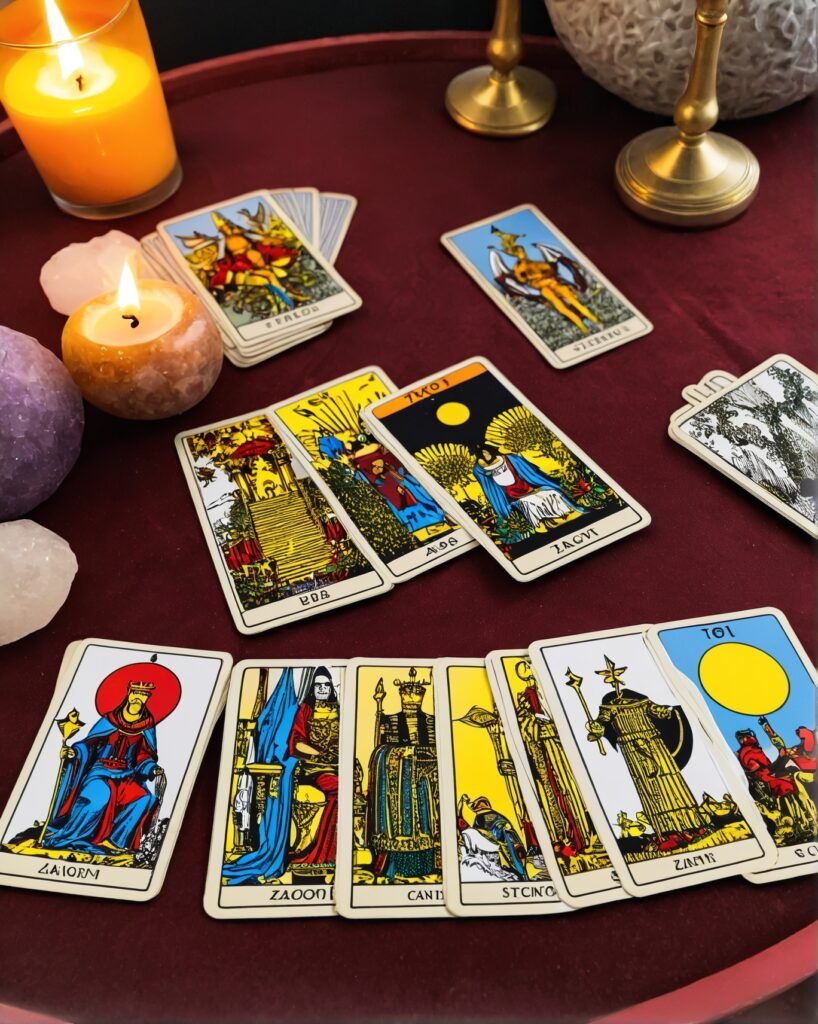
A tarot deck contains 78 cards and is often separated into two main categories; the Major Arcana and Minor Arcana. Composed of 22 cards, the Major Arcana represents big life events or spiritual lessons. Some of these cards are: The Fool, The Magician and,The High Priestess. Each card in the Major Arcana carries a specific symbolism and meaning, which are often regarded as dominant factors or key features of any tarot reading.
Of the Minor Arcana, all 56 cards are divided into suits: Cups, Pentacles, Swords and Wands. The suits represent four areas of life. The Cups are the category of emotions and relationships, Pentacles is related to material wealth & career, Swords relate to intellect & conflicts while Wands talk about your creativity and action. There are 14 cards in each suit, from Ace to Ten and Court Cards — Page (Princess), Knight, Queen and King. They shed more light on common situations and individual case as a result of these cards.
There are very many tarot decks among them a few have been prominent primarily due to their unique imagery and popularity. The most popular and widely recognizable deck is the Rider-Waite, which was first published in 1909. Because of its images and direct symbolism, this deck is popular with beginners to advanced readers.
The Thoth Tarot is another very intriguing deck, it was created by Aleister Crowley and illustrated by Lady Frieda Harris. The Thoth Tarot ties together astrology, Kabbalah and alchemy to offer stunningly intricate imagery that is a fan favorite among those interested in the more esoteric traditions.
In addition to Rider-Waite tarot, there are many other decks with their own themes and art styles including the historically classic designs of Marseille Tarot or contemporary ones that touch on modern issues using wider variety content. Its huge number of tarot decks gives practitioners the freedom to choose a deck with which they resonate, resulting in their introspective experience as a whole.
About the Author